
Diamond Shapes
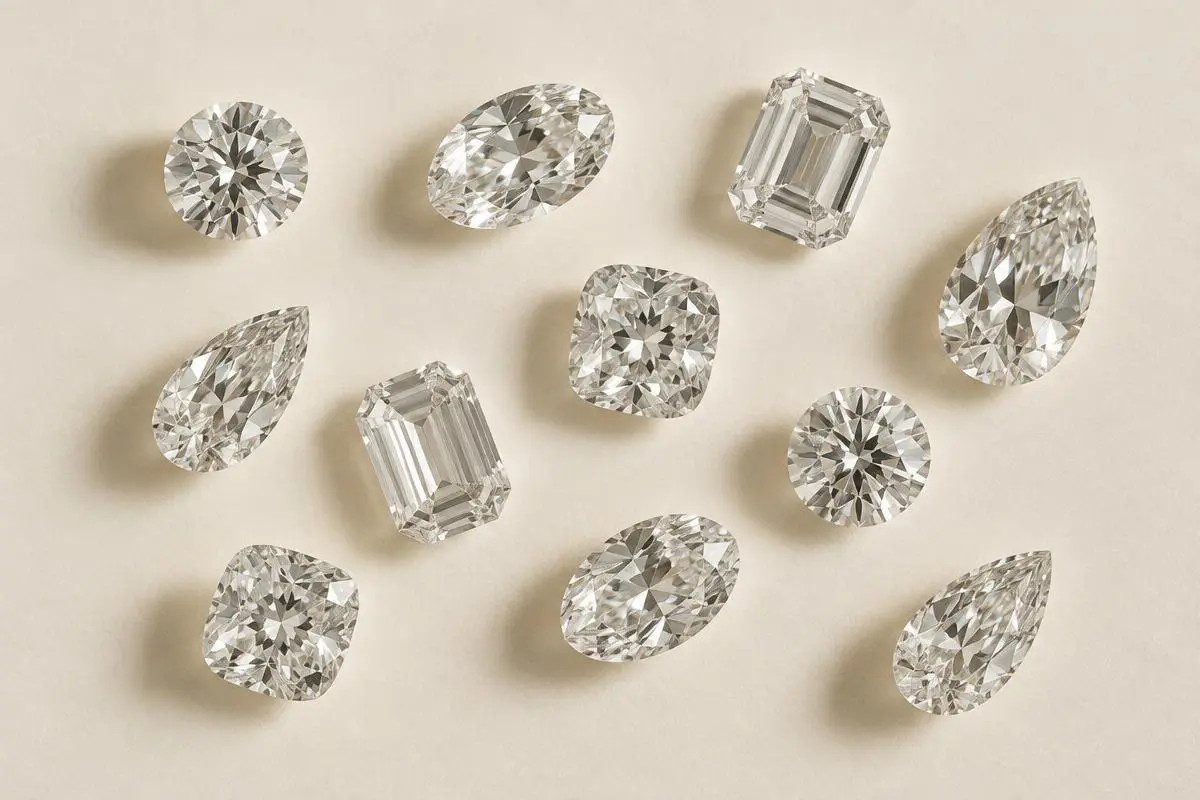
Shape is not cut quality
Shape describes a diamond's outline. Cut quality describes how its proportions and facets affect light return. Two diamonds with the same outline and carat weight can look quite different. Start with the Diamond Buying Guide and learn about the diamond 4Cs.
Round and elongated brilliant shapes
Round diamonds have a circular outline and brilliant faceting. Oval, pear, and marquise shapes offer elongated alternatives. Inspect the actual stone's images or video for uneven dark areas, including a possible bow-tie effect, rather than assuming all stones of one shape perform alike.
Step-cut shapes
Emerald and asscher shapes use broad, step-like facets for a different visual character from brilliant cuts. Their more open appearance can make color and inclusions easier to notice. Compare the individual diamond's report and appearance, not just its grade labels.
Square and softened outlines
Princess diamonds have a square outline with pointed corners. Cushion diamonds have softer corners; radiant diamonds combine a rectangular or square outline with clipped corners and brilliant-style faceting. Faceting patterns and length-to-width ratios vary, so the name alone does not tell you how a stone will look.
Match the shape to the setting
Ask the jeweler how pointed corners and tips will be protected, how the diamond sits on the finger, and whether the setting fits the chosen stone. Compare dimensions as well as carat weight.