
Diamond education
Ring Wisdom
Cut
Cut describes how well a diamond's proportions and facets return light. It has the biggest influence on sparkle. Laboratories usually grade cut for round diamonds; for other shapes, look closely at images and proportions.
Color
For white diamonds, color grades describe how colorless a stone appears. Commonly used scales run from D (colorless) through later letters with more warmth. Metal color and setting can affect how color looks.
Clarity
Clarity grades describe tiny internal features and surface marks. Many are invisible without magnification. 'Eye-clean' simply means no features are visible to the unaided eye at a normal viewing distance.
Carat
Carat measures weight. Shape and cut affect how large a diamond looks, so two stones of equal weight may appear different in size.
Natural vs lab-grown diamonds
Both are real diamonds. Natural diamonds form underground; lab-grown diamonds are made in controlled settings. Grading reports state a diamond's origin.
GIA and IGI grading reports
GIA and IGI are independent laboratories that issue grading reports. A report describes a specific diamond's characteristics. Check that the report number matches the diamond — often laser-inscribed on the girdle — and verify it on the lab's website.
Diamond shapes
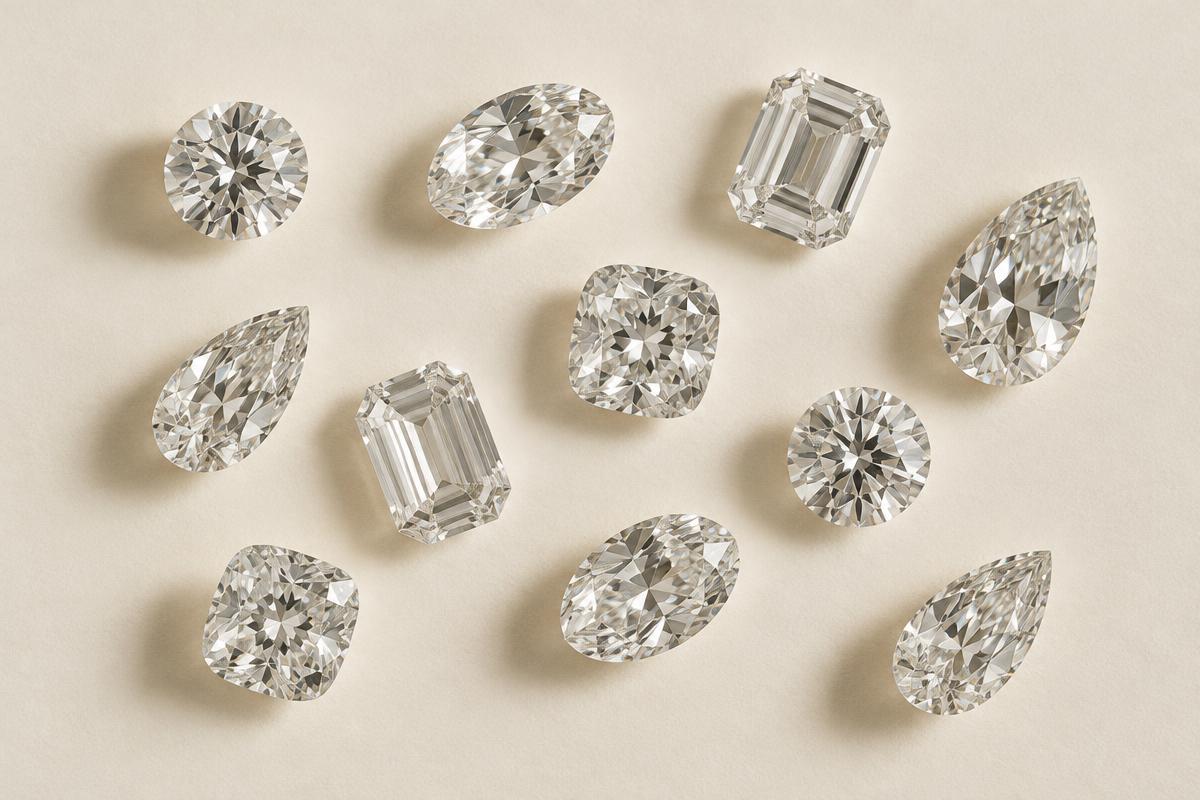
Diamond shapes include round, oval, cushion, emerald, princess, pear, marquise, radiant, and asscher. Shape is mainly a style choice, though it affects sparkle and apparent size.
Diamond certification
'Certified' usually means a diamond comes with a grading report from a laboratory. Reports from different labs are not always directly comparable, so compare stones graded by the same lab when you can.
Diamond pricing factors
Price is influenced by the 4Cs, shape, origin, market conditions, and the retailer. We don't publish prices because they change often; check current prices directly with sellers.
Ring size and fit
A comfortable fit slides over the knuckle with slight resistance. Wider bands often need a slightly larger size.