
Diamond Education
How to Pair an Engagement Ring with a Wedding Band
Learn how to pair an engagement ring with a wedding band by comparing fit, shape, metal, width, and wearing order—from flush and curved bands to intentional gaps.
By Ring Wisdom Editorial TeamPublished Updated
Affiliate disclosure: we may earn a commission from qualifying purchases through links in this article, at no extra cost to you. Learn more.
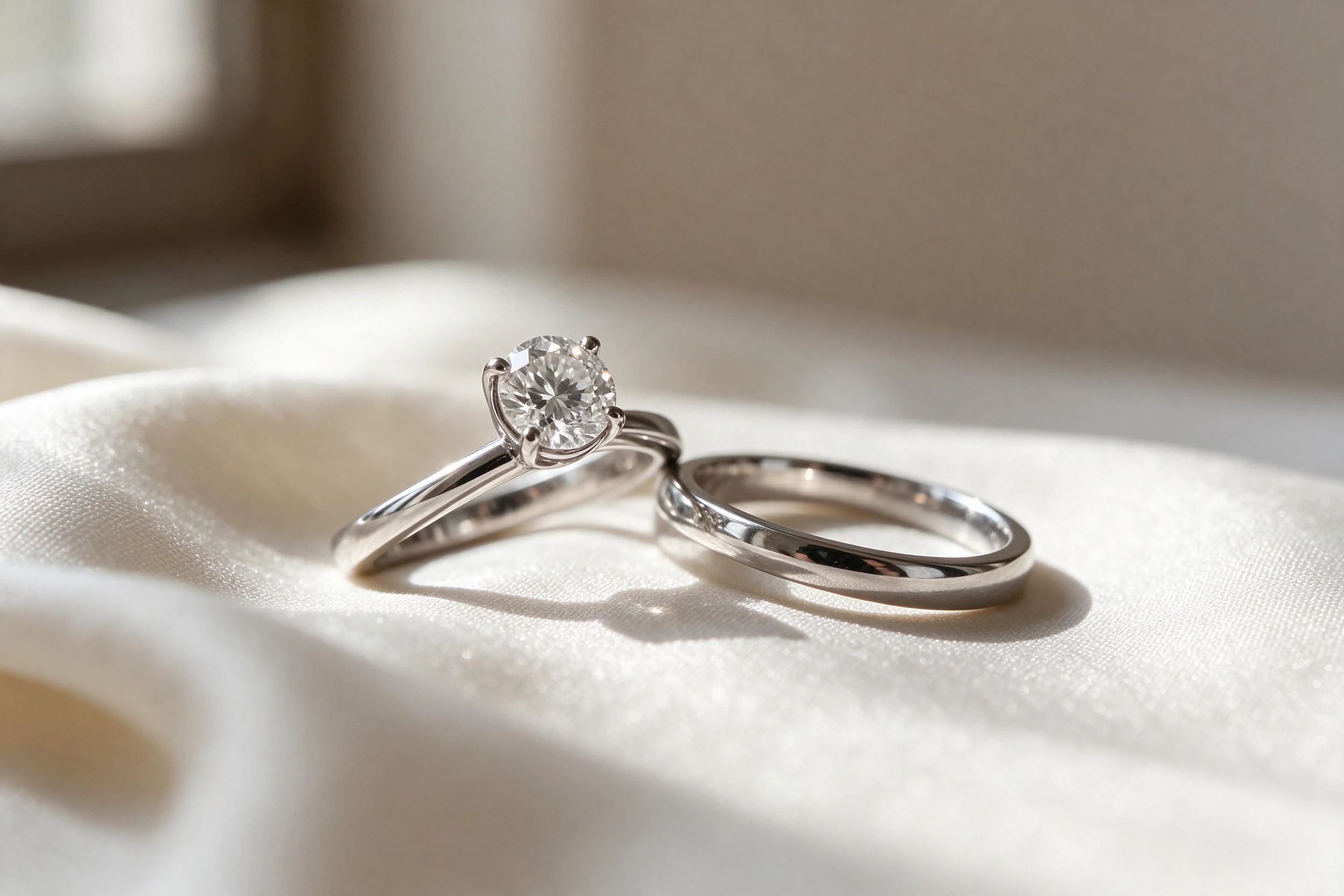
How to Pair an Engagement Ring with a Wedding Band
Choosing a wedding band to wear with an engagement ring is about more than matching metals. The two rings need to look the way you want, sit comfortably together, and work with the engagement ring’s setting. Some pairs fit flush; others leave a deliberate gap or need a curved band. There is no single correct combination.
This guide explains how to pair an engagement ring with a wedding band by checking fit, shape, metal, width, and wearing order—whether you have a solitaire, halo, oval, or marquise ring.
Start with the Fit: Flush, Curved, or a Visible Gap
Place the engagement ring on a ring mandrel or your finger, then slide a candidate wedding band beside it. Look at the pair from above and from the side. Does the band sit close to the engagement ring? Does it touch the setting? Is a small gap visible? Decide whether you like that result before choosing a style.
A straight wedding band often sits flush beside an engagement ring when the center setting leaves enough clearance above the finger. If the setting is low or the center stone projects over the band, a straight band may meet the setting before the two rings touch. That can leave a gap. The gap is not necessarily a defect; some people prefer the contrast, while others want the rings to fit closely together.
If you prefer a close fit, try a curved or contoured wedding band designed to follow the outline of the engagement ring. A V-shaped or chevron band can work with a pointed or marquise-style setting. A custom-fit band can be shaped to match a distinctive setting. GIA explains that ring settings affect a gemstone’s appearance, protection, and wearability, so assess the setting itself—not only the band’s profile—when choosing a pair.[1]
Part 1 of 5 complete
Match the Wedding Band to the Engagement Ring’s Shape
The shape and height of the engagement-ring setting affect how the two rings meet. Try the actual rings together, and check their fit from above and from the side.
- Solitaire engagement rings: A solitaire usually gives you flexibility because there are fewer accent stones or design details to coordinate. A plain straight band creates a simple pairing. A diamond-set band adds detail, while a band with a different texture or profile can introduce contrast. Check how the band meets the head and shoulders of the solitaire.
- Oval engagement rings: An oval engagement ring can pair with a straight band, a curved band, or a band with a small contour around the center setting. If you want the band to sit close, try it with the actual ring: the oval’s length and the setting’s height affect how the two pieces meet. A narrow band can keep the oval as the focal point; a wider band creates a more substantial stack.
- Halo and side-stone rings: A halo or side-stone engagement ring already has detail around the center. A plain wedding band can balance that design. If you prefer more sparkle, compare the size, spacing, and setting of the wedding-band diamonds with the engagement ring’s accents. Make sure small stones do not rub awkwardly against the adjacent ring when the bands are worn together.
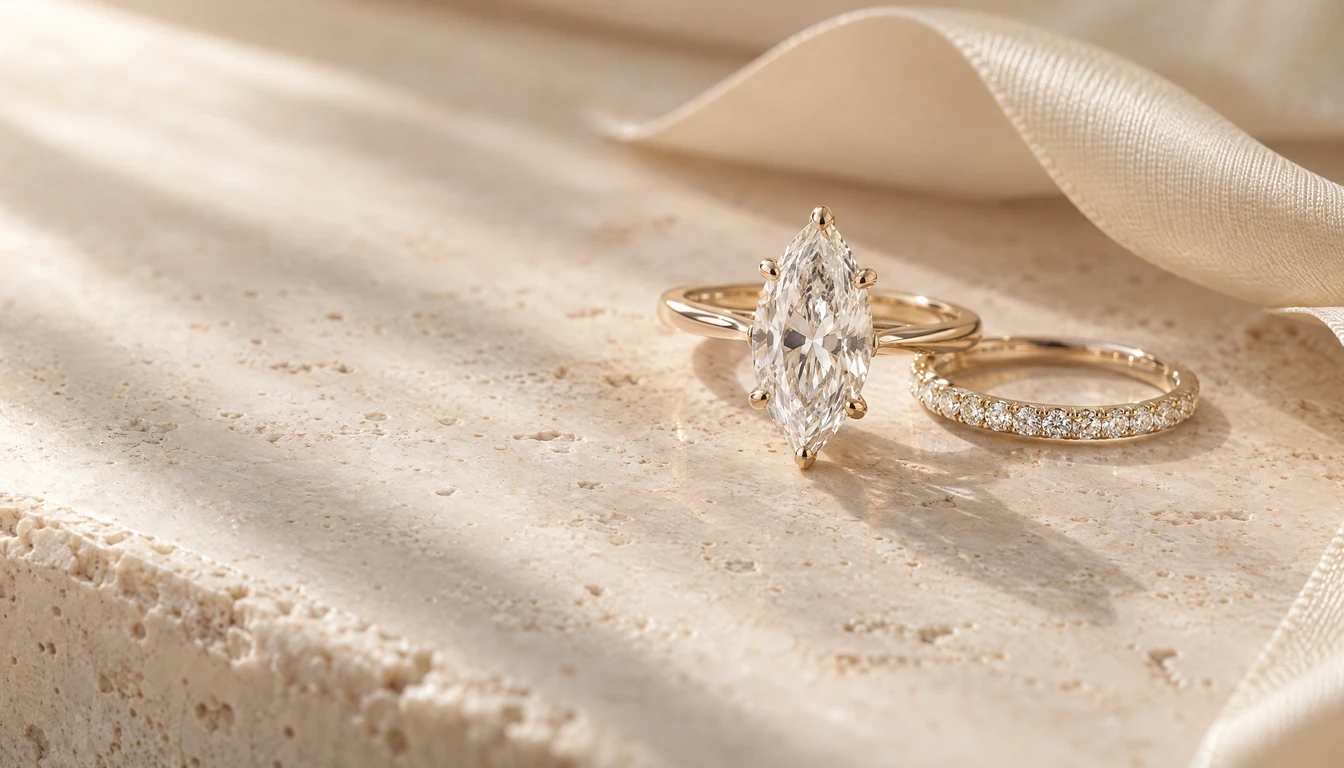
- Marquise and pointed settings: A marquise engagement ring has pointed ends that may affect where a straight wedding band can sit. Try a curved or V-shaped band if you want it to follow the outline. Check that the bands do not press against the setting or make the marquise tips feel exposed. Ring placement is a matter of personal preference; comfort and secure construction matter more than following a particular stack shape.
Choose How the Two Rings Relate in Style
A coordinated pair does not have to be identical. You can match the metal and keep the designs different, or repeat one detail—such as a row of small diamonds, a milgrain edge, or a curved profile—so the rings feel connected.
For a minimal look, pair a detailed engagement ring with a plain band. For a brighter set, choose a wedding band with diamonds or other stones, but compare the two rings together to ensure one does not visually overwhelm the other. If the engagement ring is delicate, a very wide band may dominate the stack; if the center setting is bold, a slim band may feel understated. These are styling choices, not rules.
Should the Metals Match?
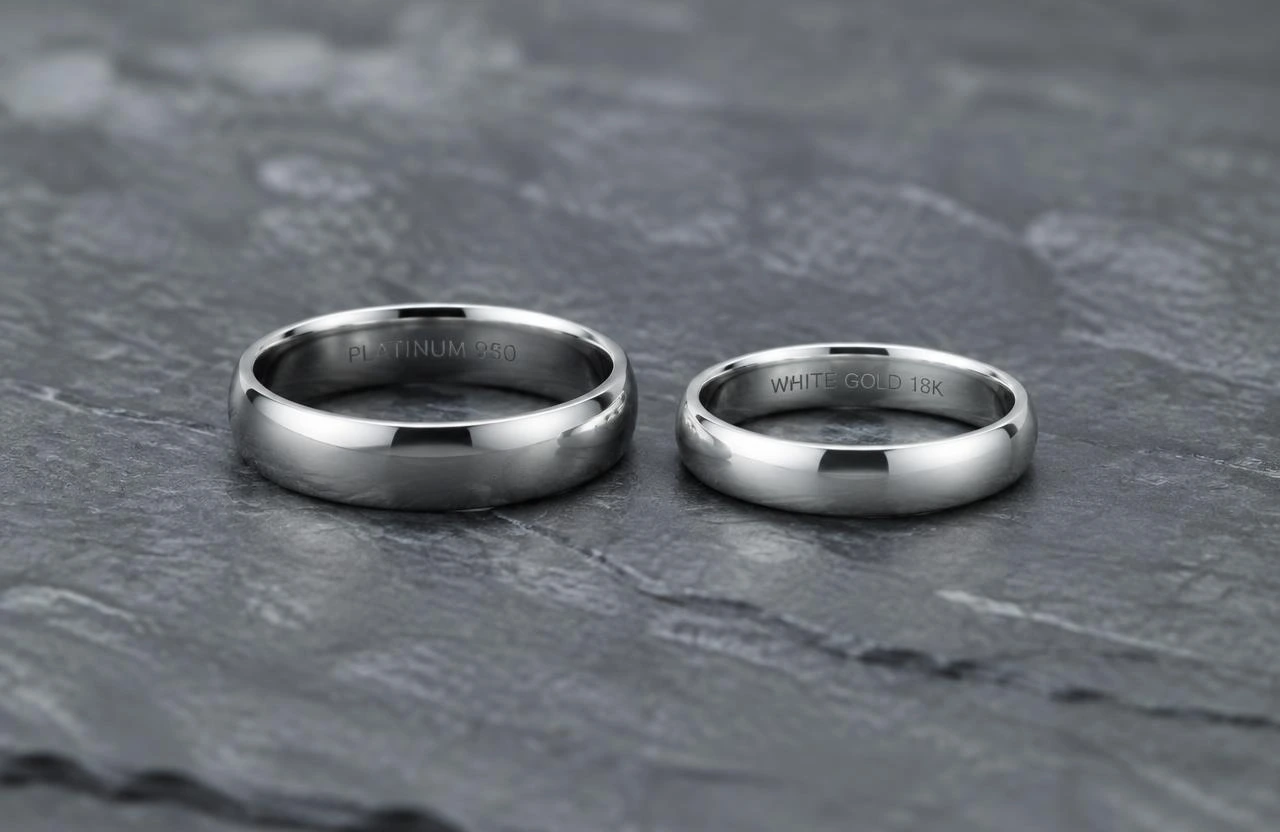
Matching metals creates a consistent appearance, but mixing metal colors is also a valid choice. A yellow-gold band beside a platinum or white-gold engagement ring can create deliberate contrast. To make mixed metals look intentional, repeat the second metal elsewhere in the stack or choose a band whose shape and finish relate to the engagement ring.
Compare the actual rings rather than relying only on color names or product photos. Ask the jeweler to confirm the metal and alloy of each piece and whether the two designs are suitable for daily wear together. The FTC Jewelry Guides state that sellers should accurately represent precious-metal content and other material characteristics of jewelry.[2]
Compare Band Width, Thickness, and Comfort
The wedding band changes the overall width of the stack. Try bands in different widths and profiles, and pay attention to how the combined rings feel between your fingers. A pairing that looks balanced in a product photo may feel bulky or tight when worn.
Check that the bands sit evenly and do not twist or slide into an uncomfortable position. If you plan to wear both rings on the same finger, have the fit assessed with both rings together. GIA advises professional sizing and notes that finger size can fluctuate with temperature and other factors.[3] If the pair feels tight, do not assume you should simply size up without a fitting: the jeweler can assess both the individual ring sizes and the combined fit.
Decide How You Want to Wear the Rings
A common tradition is to wear the wedding band closest to the hand, with the engagement ring above it. Some people reverse the order, wear the engagement ring alone on certain days, or place the rings on different hands. GIA notes that traditions and customs vary and that the choice can reflect personal preference, comfort, or cultural practice.[3]
When trying a pair, test the order you expect to wear most often. Some settings make one arrangement feel more secure or sit more naturally than another. You can also choose a wedding band that looks good both beside the engagement ring and on its own.
A Simple Way to Compare Wedding-Band Pairings
When you try a wedding band with an engagement ring, check these details:
- Fit: Does the band sit flush, follow the setting’s contour, or leave a gap you are comfortable with?
- Clearance: Do the bands touch the center stone, prongs, or other parts of the setting?
- Proportion: Does the band’s width and thickness balance the engagement ring?
- Style: Do matching details or intentional contrast make the pair feel right to you?
- Comfort: Can you wear both rings comfortably in your preferred order?
- Care: Ask the jeweler how the two pieces should be inspected and cleaned when worn together.
Sources
[1] GIA, Guide to Engagement Ring Settings — https://4cs.gia.edu/en-us/blog/guide-to-ring-settings
[2] Federal Trade Commission, Jewelry Guides — https://www.ftc.gov/news-events/topics/tools-consumers/jewelry-guides
[3] GIA, How to Wear Your Engagement Ring and Wedding Band — https://4cs.gia.edu/en-us/blog/how-to-wear-engagement-ring-wedding-band/
Keep learning: read the Diamond Buying Guide, explore diamond shapes and the diamond 4Cs, browse comparisons, or see all buying advice.
Frequently asked questions
Does a wedding band have to sit flush against an engagement ring?
No. Some people prefer a flush fit, while others are comfortable with a visible gap. If you want a close fit, try a curved or custom-contoured band designed for the engagement ring’s specific setting.
How do I pair a wedding band with an oval engagement ring?
Try a straight band first, then compare curved or contoured options if the setting prevents a flush fit. Check the rings together from above and from the side, and choose a width that feels comfortable and balanced on your hand.
Can I mix gold and platinum in a ring pairing?
Yes. Matching metals is one option, but mixing them can create intentional contrast. Check the actual metal details with the jeweler and try the rings together to see whether their colors and profiles work as a set.
Which ring goes on first: the engagement ring or wedding band?
A common tradition places the wedding band closest to the hand, with the engagement ring above it. Customs vary, and some people choose a different order or wear the rings separately. Choose the arrangement that feels meaningful and comfortable to you.[3]
Should I buy the wedding band at the same time as the engagement ring?
Buying or trying them together makes it easier to check fit, clearance, and style. If you choose the band later, bring the engagement ring to the jeweler or provide accurate details about its setting and dimensions.
Related articles
Engagement Ring Shopping
How to Choose an Engagement Ring: 5 Setting Styles Compared
Compare solitaire, halo, hidden halo, bezel and vintage-inspired settings by look, security, upkeep and total cost, then use a simple scoring framework to pick between your finalists.
Updated November 13, 2026
Ring Sizing
How to Find Your Ring Size: Accurate Methods and Fit Tips
Discover how to measure your ring size accurately, understand proper ring fit, use professional sizing tools and discreetly estimate a surprise engagement ring size.
Updated November 11, 2026
Diamond Education
How to Choose a Marquise Diamond Wedding Ring
Explore marquise diamond wedding rings, matching bands, and ring sets. Learn how to choose a style that complements your diamond and suits your taste.
Updated November 9, 2026
Comparisons
Platinum vs White Gold
Two white metals compared on look, durability, maintenance, and feel.
Updated September 28, 2026