
Engagement Ring Shopping
How to Choose a Wedding Band That Fits Your Engagement Ring
Learn how to choose a wedding band that complements your engagement ring. Compare straight, curved, and open bands, metals, fit, and everyday comfort.
By Ring Wisdom Editorial TeamPublished Updated
Affiliate disclosure: we may earn a commission from qualifying purchases through links in this article, at no extra cost to you. Learn more.
Decide How You Want the Rings to Sit
Choosing a wedding band to match your engagement ring is about more than finding the same metal or matching diamonds. The right pairing should feel comfortable, suit your style, and work with the shape and setting of your engagement ring.
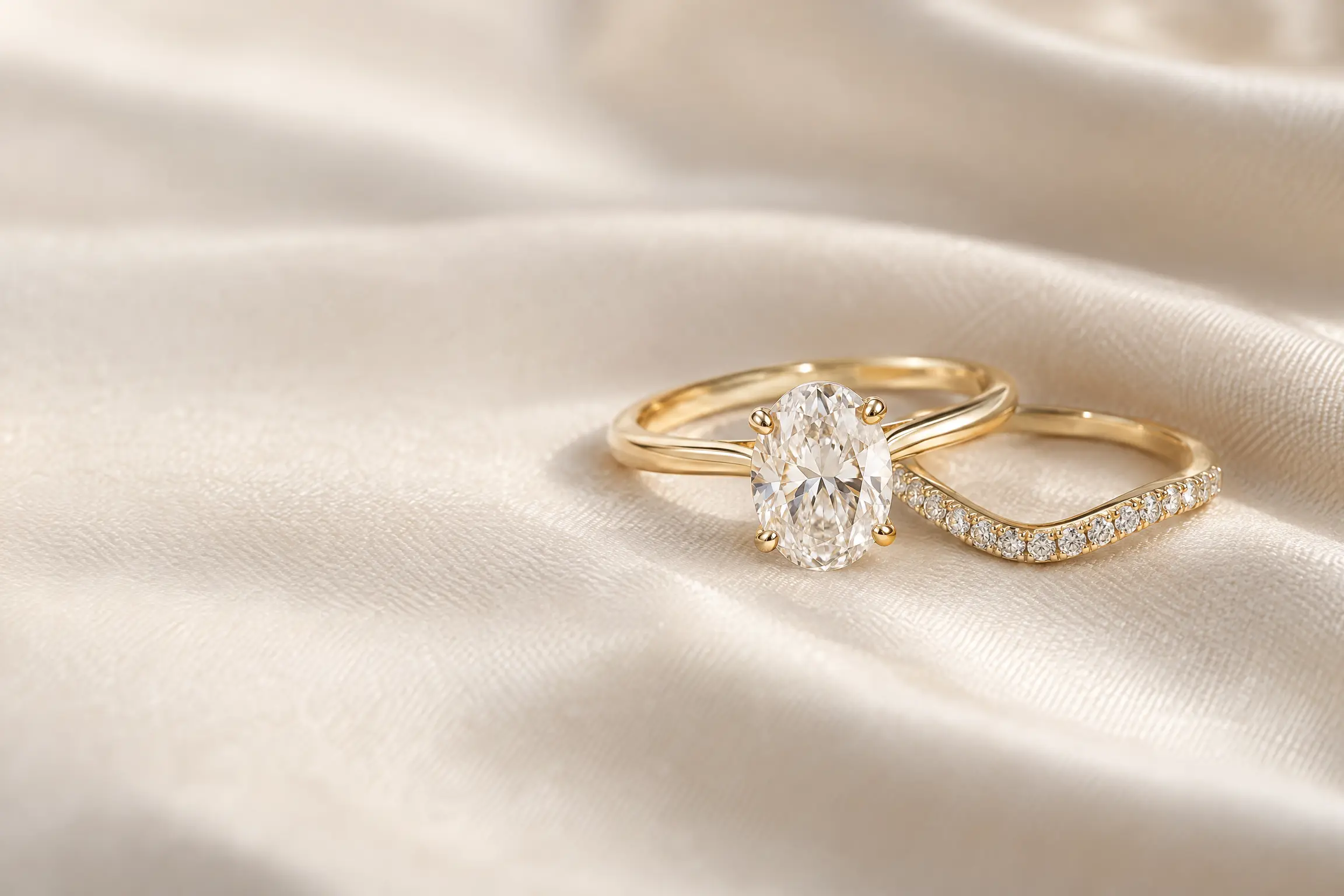
Before browsing wedding bands, decide whether you want a flush fit or are comfortable with a gap. A flush fit means the wedding band sits close beside the engagement ring, creating a streamlined look. A small gap can also look attractive and may be necessary when the engagement ring has a low setting or an unusual shape.
There is no rule that the two rings must touch. Choose the arrangement that looks balanced to you and feels comfortable during everyday movement.
Check the Engagement Ring’s Setting and Shape
The engagement ring’s construction is often the biggest factor in how a straight wedding band will sit.
A straight band can usually sit closer to an engagement ring when the center setting is raised enough to leave room beside it. If the setting is low, or the ring has a wide basket, side stones, a hidden halo, or decorative details near the finger, a straight band may meet the setting before it reaches the engagement-ring shank. This can leave a gap or cause the rings to press against one another.
Elongated stones such as oval, pear, and marquise shapes may extend farther along the finger than a round stone. Depending on the setting, that can make it harder for a straight band to sit close. An angled, curved, or open band may follow the outline more naturally.
The setting matters as much as the center-stone shape, so evaluate the actual rings together rather than relying on a general shape rule. If you want a close fit, ask a jeweler to check where the bands meet and whether they could rub or put pressure on delicate details.
Part 1 of 4 complete
Choose a Wedding Band Style That Works with Your Ring
A straight band is a classic, versatile choice. It can look clean beside a solitaire or another setting that leaves enough clearance. Straight bands are also easy to wear on their own and can be simpler to pair with other rings later.
A curved or contoured band has a shaped edge designed to follow the outline of an engagement ring. It can be a good option when a straight band would leave a gap, particularly with low settings or prominent center stones. Check the alignment from above and from the side.
An open band leaves a space near the center, while a notched band has a shaped indentation. These designs can create room for a center stone or setting without requiring the entire band to curve around the ring. Make sure the opening aligns with the setting and that the rings do not shift into an uncomfortable position.
A bridal set is designed to coordinate, and often to fit together, from the start. If you already own your engagement ring, a jeweler may be able to make a custom band that follows its shape. Consider whether you would also like the band when worn by itself.
- Choose a straight band for a classic look when the setting leaves enough room.
- Consider a curved or contoured band when you want the band to follow the outline of the engagement ring.
- Try an open or notched band if the center stone or setting needs extra clearance.
- Ask about a custom band if the engagement ring has an unusual shape or setting.
Match Metals—or Mix Them Intentionally
Matching the metal color is an easy way to create a coordinated look. A yellow-gold band beside a yellow-gold engagement ring feels cohesive, and white metals can create a similarly uniform appearance. You do not have to match, though. Yellow and white gold, or a warm gold band beside a platinum ring, can make a deliberate two-tone stack.
Color is only one consideration. Different metals and gold alloys can wear differently when rings rub together. Platinum is denser than gold, and contact between different metals may contribute to wear or surface marks over time. Ask a jeweler how the specific alloys and ring shapes are likely to interact.
Using the same gold karat can help keep the alloys consistent, but it does not guarantee that two rings will wear identically. The exact alloy, construction, finish, and amount of movement also matter.
Coordinate Sparkle, Details, and Band Width
A diamond wedding band can echo the sparkle of an engagement ring, while a plain metal band can keep a detailed center stone in focus. Pavé beside pavé creates an embellished look; a simple band beside a halo or pavé engagement ring can provide visual balance.
Consider the band’s profile as well as its decoration. Rounded, flat, and knife-edge profiles create different effects when placed together. Engraving, milgrain, or vintage details can complement the engagement ring or create an intentional contrast.
Width affects both the look and feel of the stack. Two wide bands can feel heavier on the finger, so try the full combination on your hand rather than judging the wedding band by itself. A jeweler can help check comfort and sizing when both rings are worn together.
Make Comfort and Everyday Wear Part of the Decision
A wedding band and engagement ring may look perfect in a display but feel different after several hours of wear. Try the rings together and check how they feel as you move your hand.
Finger size can change with temperature and other conditions. Have a jeweler measure your finger and assess the fit of the complete set, especially if the combined bands are wide. The size that feels right for one ring alone may not feel exactly the same when two rings are worn together.
- Make sure the rings feel comfortable together and do not pinch.
- Check that the edges do not catch on clothing or neighboring fingers.
- See whether the rings stay in the position you prefer or rotate excessively.
- Consider whether the combined width feels right for your hand and daily routine.
- Ask a jeweler to check that the setting and band are not pressing against each other.
A Simple Way to Choose Your Pairing
Use this checklist when comparing wedding bands for your engagement ring:
- Set your style goal: decide whether you want a seamless stack, a small gap, or a contrasting look.
- Inspect the setting: check its height, basket, side details, and center-stone outline.
- Try more than one shape: compare straight, curved, and open bands where available.
- Check the materials: choose matching metals for a uniform appearance or mix them deliberately after discussing wear with a jeweler.
- Wear the complete set: check comfort, movement, combined width, and how the rings look from different angles.
- Think ahead: consider resizing, adding an anniversary band, or wearing the wedding band alone.
The Best Wedding Band Is the One That Works for You
The best wedding band to match your engagement ring is not necessarily the closest visual match. It is the pairing that reflects your style, feels comfortable, and works with the setting and materials of the rings.
Compare the full set on your hand, ask a jeweler to check the fit, and choose a design you will be happy to wear together—or separately—for years to come.
Keep learning: read the Diamond Buying Guide, explore diamond shapes and the diamond 4Cs, browse comparisons, or see all buying advice.
Frequently asked questions
Does my wedding band have to match my engagement ring?
No. Matching metals and styles can create a coordinated look, but mixing colors, finishes, and designs can be intentional. Prioritize comfort, how the rings interact, and the style you want to wear.
Should a wedding band sit flush against an engagement ring?
Not necessarily. A flush fit is one preference, not a requirement. Some settings and center-stone shapes leave little room for a straight band, and a small gap can be comfortable and visually appealing. If you want no gap, ask a jeweler to check the exact fit before you buy.
What wedding band works with a low-set engagement ring?
A curved, contoured, open, or notched band may fit around a low setting more closely than a straight band. The best option depends on the setting’s shape and clearance, so try the rings together or consult a jeweler.
Can I mix platinum and gold wedding rings?
Yes. You can mix metals for a two-tone look. Since metals and alloys may wear differently when they rub together, ask a jeweler about the particular rings and their care.
Should I buy the wedding band before or after the engagement ring?
If you already know the engagement-ring design, choosing the wedding band afterward lets you test the fit with the actual setting. If you are shopping for both, compare them together or choose a coordinated set.
Can I wear my wedding band without my engagement ring?
Yes. Many people wear one ring at a time for comfort, work, travel, or personal preference. If you expect to wear the band alone, try it by itself and make sure you like its shape and appearance on its own.
Related articles
Engagement Ring Shopping
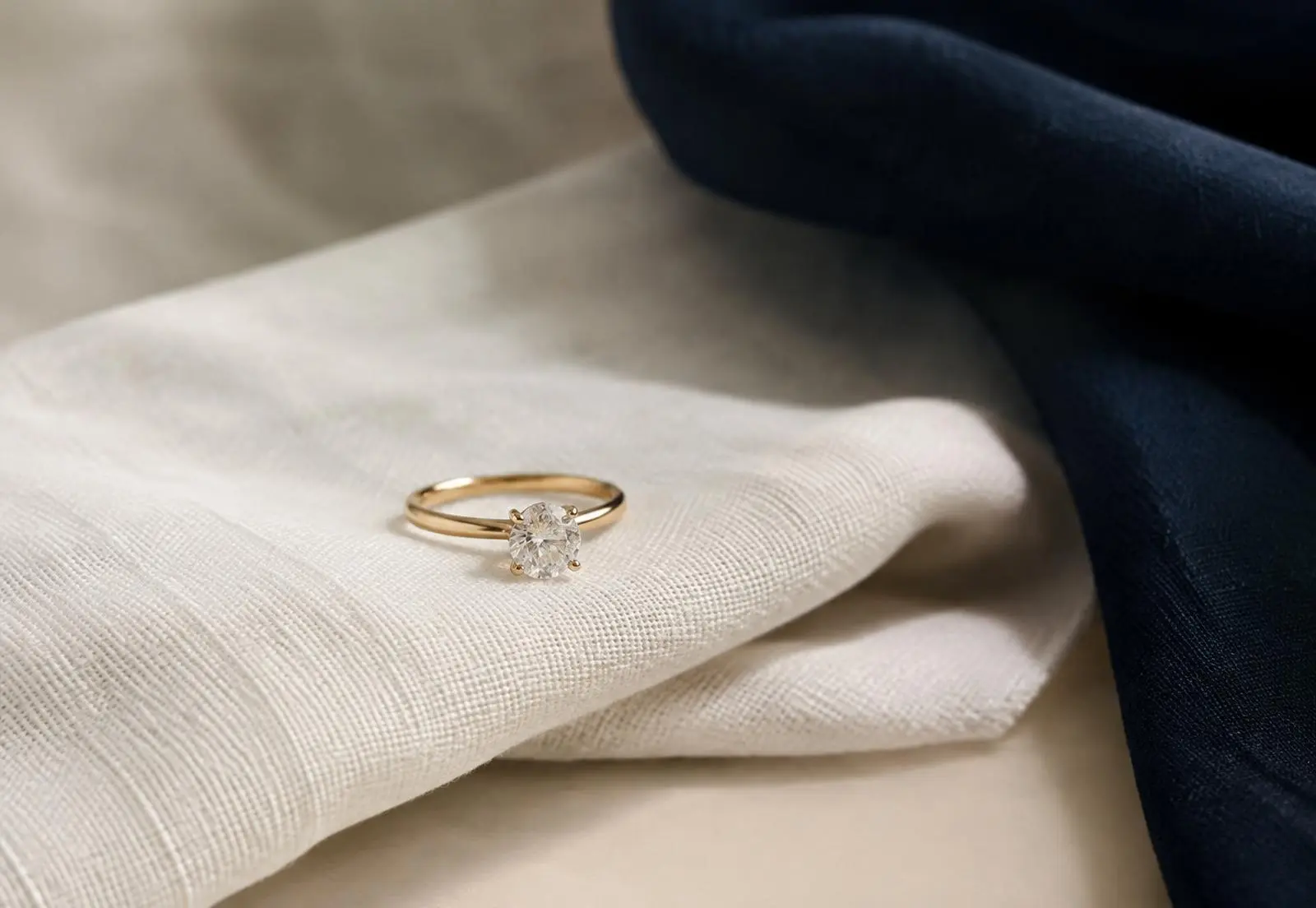
How to Choose an Engagement Ring: 5 Setting Styles Compared
Compare solitaire, halo, hidden halo, bezel and vintage-inspired settings by look, security, upkeep and total cost, then use a simple scoring framework to pick between your finalists.
Updated November 13, 2026
Ring Sizing
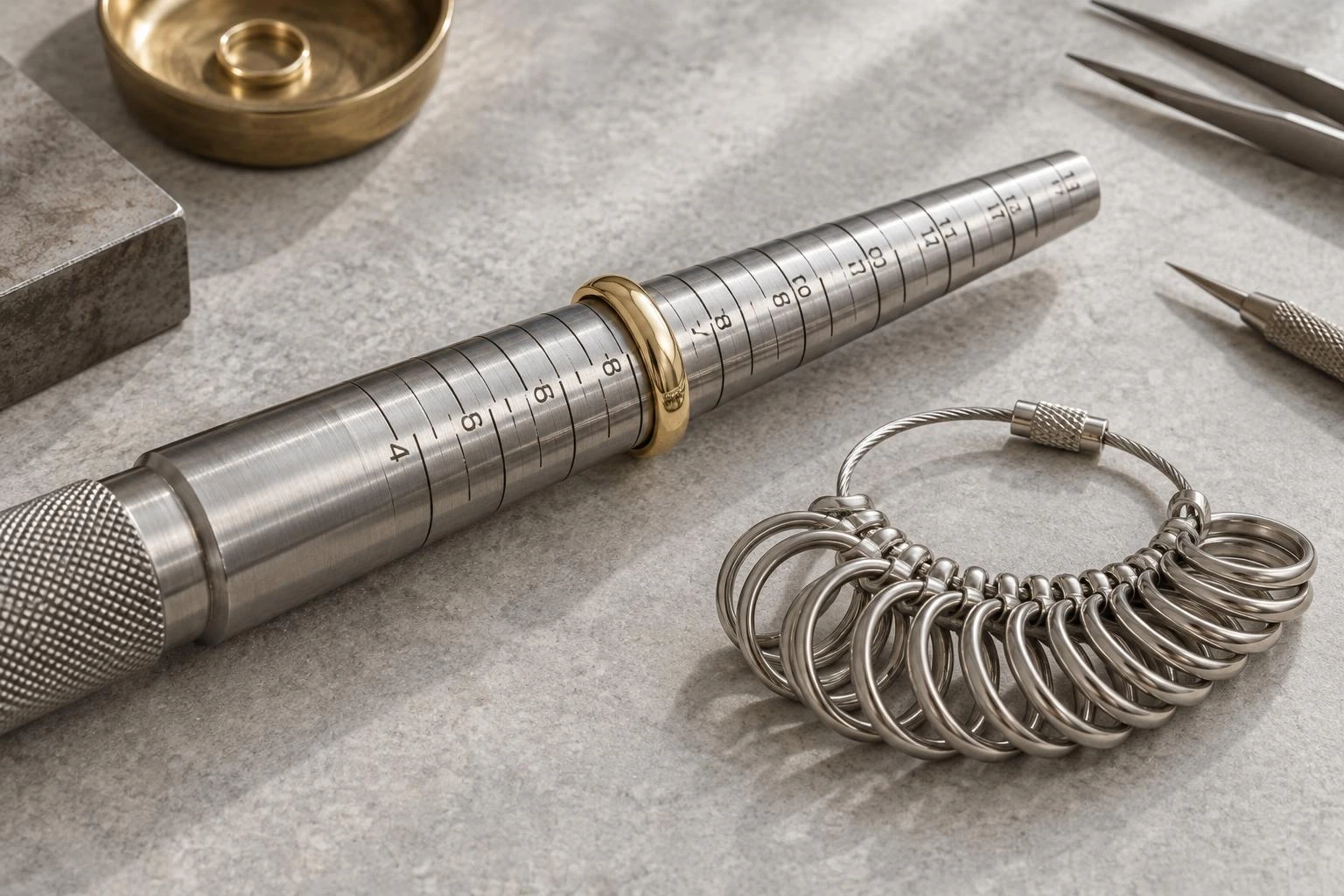
How to Find Your Ring Size: Accurate Methods and Fit Tips
Discover how to measure your ring size accurately, understand proper ring fit, use professional sizing tools and discreetly estimate a surprise engagement ring size.
Updated November 11, 2026
Jewelry Care
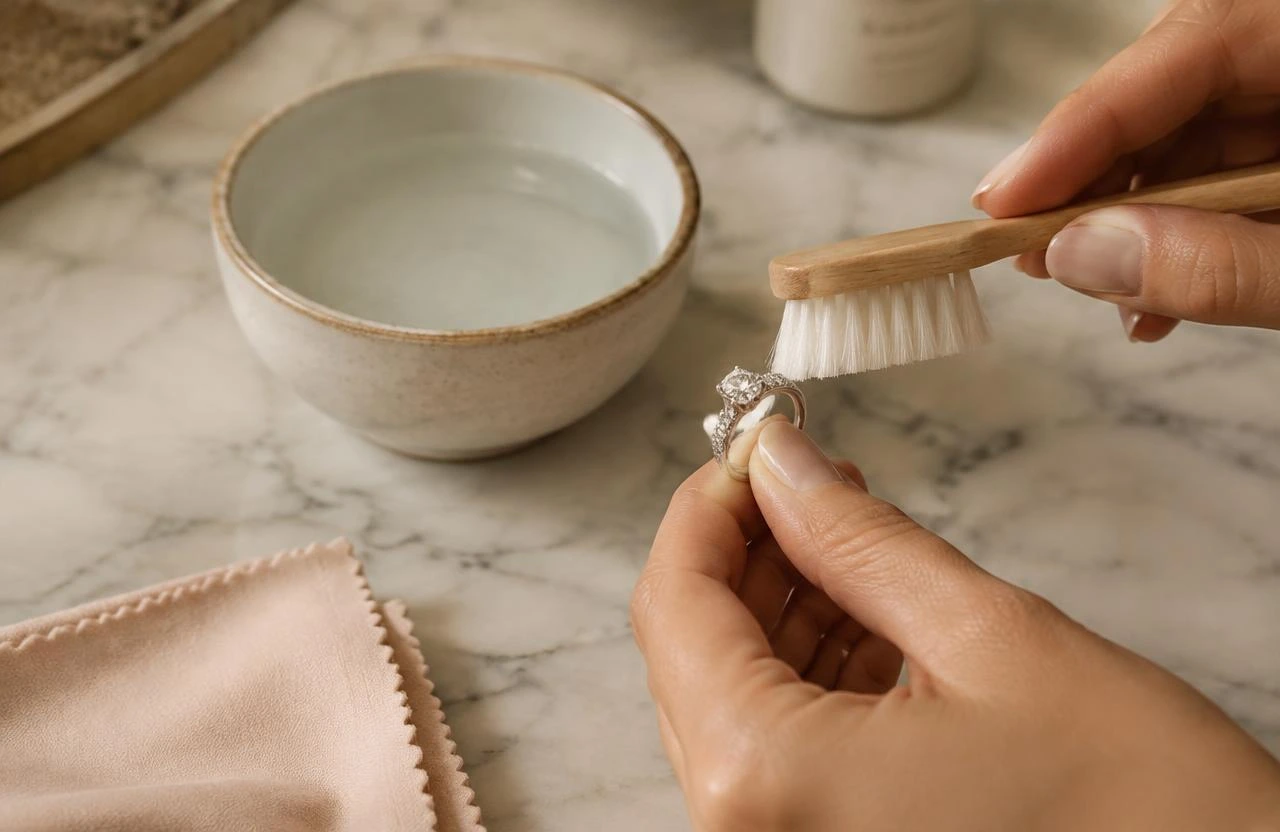
How to Clean a Diamond Ring at Home: 5 Simple Steps for More Sparkle
To clean a diamond ring at home, soak it in warm water with a little mild dish soap, gently brush the stone and setting with a soft toothbrush, rinse over a closed drain, and pat dry with a lint-free cloth.
Updated November 13, 2026