
Diamond Education
What Is 14 Karat Gold? Purity, Value, Price per Gram, and How It Compares to 10K Gold
Learn what 14 karat gold means, how its purity affects value, how to estimate its price per gram, and how it compares with 10K gold.
By Ring Wisdom Editorial TeamPublished Updated
Affiliate disclosure: we may earn a commission from qualifying purchases through links in this article, at no extra cost to you. Learn more.
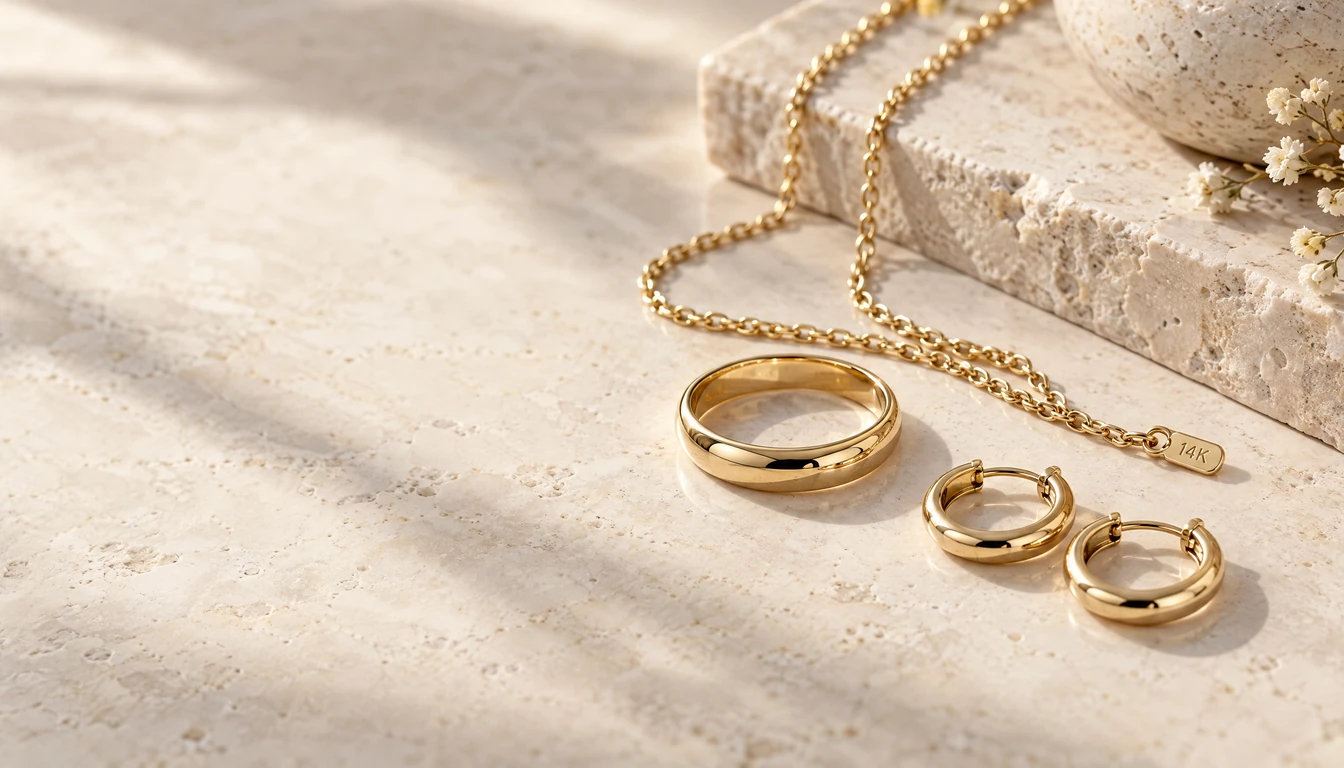
What Is 14 Karat Gold?
If you have shopped for a gold necklace, chain, or pair of earrings, you have probably seen labels such as 10K, 14K, and 18K. These numbers describe the gold’s purity. Fourteen-karat gold, also written as 14K gold, is a popular choice for jewelry because it combines a substantial amount of gold with alloy metals that can contribute to strength and durability.
Gold purity is measured in karats, with 24 karats representing pure gold. Fourteen-karat gold contains 14 parts gold out of 24. The remaining portion consists of other metals, often called alloys.
In percentage terms, 14 divided by 24 equals approximately 0.583. This means 14K gold is about 58.3% pure gold, with the balance made up of alloy metals. The exact alloy mix varies by manufacturer and product and can affect the jewelry’s color and other characteristics.
You may see 14K jewelry stamped “14K,” “14KT,” or “585.” The 585 mark refers to 585 parts gold per thousand, or 58.5%. Marking practices vary by country, so a stamp alone may not tell you everything about a piece’s authenticity or history.
In jewelry, karat measures gold purity. Carat usually measures the weight of a gemstone, such as a diamond. Although the terms sound alike, they refer to different things.
How Much Gold Is in 14K Gold?
A 14K gold item contains about 58.3% gold by weight. The rest is made up of metals added to create the desired alloy.
For example, if a piece weighs 10 grams, its theoretical pure-gold content is approximately 10 grams multiplied by 0.583, or 5.83 grams of gold.
This calculation is useful for estimating gold content, but it does not establish the item’s exact resale price. The total weight may include gemstones or other materials, and a buyer’s offer can depend on testing, condition, current market prices, and other factors.
Part 1 of 4 complete
14K vs. 10K Gold: What’s the Difference?
The main difference between 10K and 14K gold is their gold content. Ten-karat gold contains 10 parts gold out of 24, or about 41.7% gold. Fourteen-karat gold contains 14 parts out of 24, or about 58.3%. For comparison, 18K gold is 75% gold.
All else being equal, a 14K piece generally has a higher gold-content value than a comparable 10K piece of the same weight. However, the price of finished jewelry also reflects design, brand, labor, gemstones, and retail costs.
Both 10K and 14K gold are alloys rather than pure gold. Durability depends on the particular alloy, the jewelry’s design and construction, and how it is worn and cared for. It is too simple to judge a piece’s durability by karat alone.
Choose 14K if you want a higher gold content than 10K and like the appearance and price of the specific piece. Consider 10K if you prefer a lower-cost option and are comfortable with its lower gold content. The right choice depends on your priorities, budget, and the jewelry itself.
- 10K gold: approximately 41.7% gold.
- 14K gold: approximately 58.3% gold.
- 18K gold: approximately 75% gold.
How Much Is 14 Karat Gold Worth per Gram?
The value of the gold in a 14K item is linked to the current price of pure gold. Since 14K gold is approximately 58.3% pure, a basic estimate of its raw gold value is the current pure-gold price per gram multiplied by 0.583.
If the market price is quoted per troy ounce, convert it to a per-gram price first. One troy ounce equals approximately 31.1035 grams.
This is a simplified estimate, not a guaranteed selling price or retail price. A secondhand buyer or gold dealer may offer less than the estimated raw gold value. New jewelry may cost more because its price can include design, labor, branding, distribution, and other costs.
- Estimated 14K gold-content value per gram = current pure-gold price per gram × 0.583.
- Check the price date, currency, and unit before making a comparison.
- Consider whether the item’s total weight includes gemstones or non-gold parts.
What Affects the Price of 14K Gold?
Gold prices change over time and can vary between the moment you check a price and the moment a transaction takes place. For an up-to-date estimate, use a reliable source for the current pure-gold price and note the date, currency, and unit.
Weight and purity affect the amount of gold in a piece. When estimating its gold content, use the weight of the gold itself rather than assuming the combined weight of gemstones and other materials is all gold.
The price of finished jewelry is not based only on its metal content. Workmanship, design, brand, gemstones, and the seller’s pricing can also affect what a piece costs or what a buyer is willing to pay.
- Current market price of pure gold.
- The jewelry’s weight and confirmed purity.
- Gemstones and other materials included in the piece.
- Craftsmanship, design, brand, and retail costs.
- Testing, refining, and buyer fees or margins.
Is 14K Gold Good for Everyday Jewelry?
Many people choose 14K gold for jewelry they plan to wear regularly. It has a higher gold content than 10K and is available in a wide range of styles and colors.
Whether a particular piece is suitable for everyday wear depends on more than its karat. Consider its setting, clasp, chain thickness, construction, and how you plan to use it. Remove jewelry when it may be exposed to harsh chemicals or rough activity, and follow the care advice for the specific piece.
If you have sensitive skin, check the product information about the alloy. Some gold alloys may contain metals, such as nickel, that can irritate certain people. The term “14K gold” alone does not specify the complete alloy composition.
Final Thoughts
Fourteen-karat gold contains approximately 58.3% gold, with the remaining portion made up of alloy metals. It is commonly used in jewelry and comes in different colors, designs, and styles.
When comparing 14K with 10K gold, consider both purity and the details of the specific piece. To estimate raw gold-content value, multiply the current pure-gold price per gram by 0.583. Treat that as a starting point rather than a guaranteed buying or selling price, because jewelry value also depends on weight, stones, craftsmanship, brand, and the terms offered by the seller or buyer.
Keep learning: read the Diamond Buying Guide, explore diamond shapes and the diamond 4Cs, browse comparisons, or see all buying advice.
Frequently asked questions
Is 14K gold real gold?
Yes. 14K gold is real gold and contains approximately 58.3% gold by weight. The remaining portion consists of alloy metals.
Is 14K gold worth buying?
It can be a suitable choice if its gold content, appearance, construction, and price meet your needs. Compare the specific item’s materials and details rather than relying on its karat marking alone.
How much is 14K gold worth per gram today?
The estimate changes with the current market price of pure gold. As a starting point, multiply the current pure-gold price per gram by 0.583. This estimates the gold content, not necessarily the amount a dealer will pay or the retail price of jewelry.
What does a 585 stamp mean on gold jewelry?
A 585 mark generally indicates that the item contains 585 parts gold per thousand, equivalent to 58.5% gold. That is close to the conventional 14K proportion. Marking standards can vary, so ask a qualified jeweler to assess a piece if you need confirmation.
Is 14K gold better than 10K gold?
Neither is universally better. Fourteen-karat gold has a higher gold content, while 10K gold has a lower gold content. Compare the item’s price, design, construction, and alloy details to decide which better suits your preferences.
What is the difference between karat and carat?
Karat measures the purity of gold. Carat usually measures the weight of a gemstone, such as a diamond.
Related articles
Diamond Education
The 4Cs of Diamond Quality: A Practical Buyer's Guide
How cut, color, clarity and carat weight affect a diamond's look and price, and a step-by-step way to decide which grades are worth paying for.
Updated November 13, 2026
Budget Planning
How Much Should You Spend on a Ring? A Practical Budget Guide
Learn how to create a realistic engagement ring budget, compare natural and lab-grown diamonds, understand setting costs and avoid expensive financing mistakes.
Updated November 11, 2026