
Diamond Education
Three-Stone Engagement Rings: How to Choose the Right Design
Compare three-stone engagement rings by diamond shape, proportions, setting, and budget. Explore popular styles and learn how to pair your ring with a wedding band.
By Ring Wisdom Editorial TeamPublished Updated
Affiliate disclosure: we may earn a commission from qualifying purchases through links in this article, at no extra cost to you. Learn more.
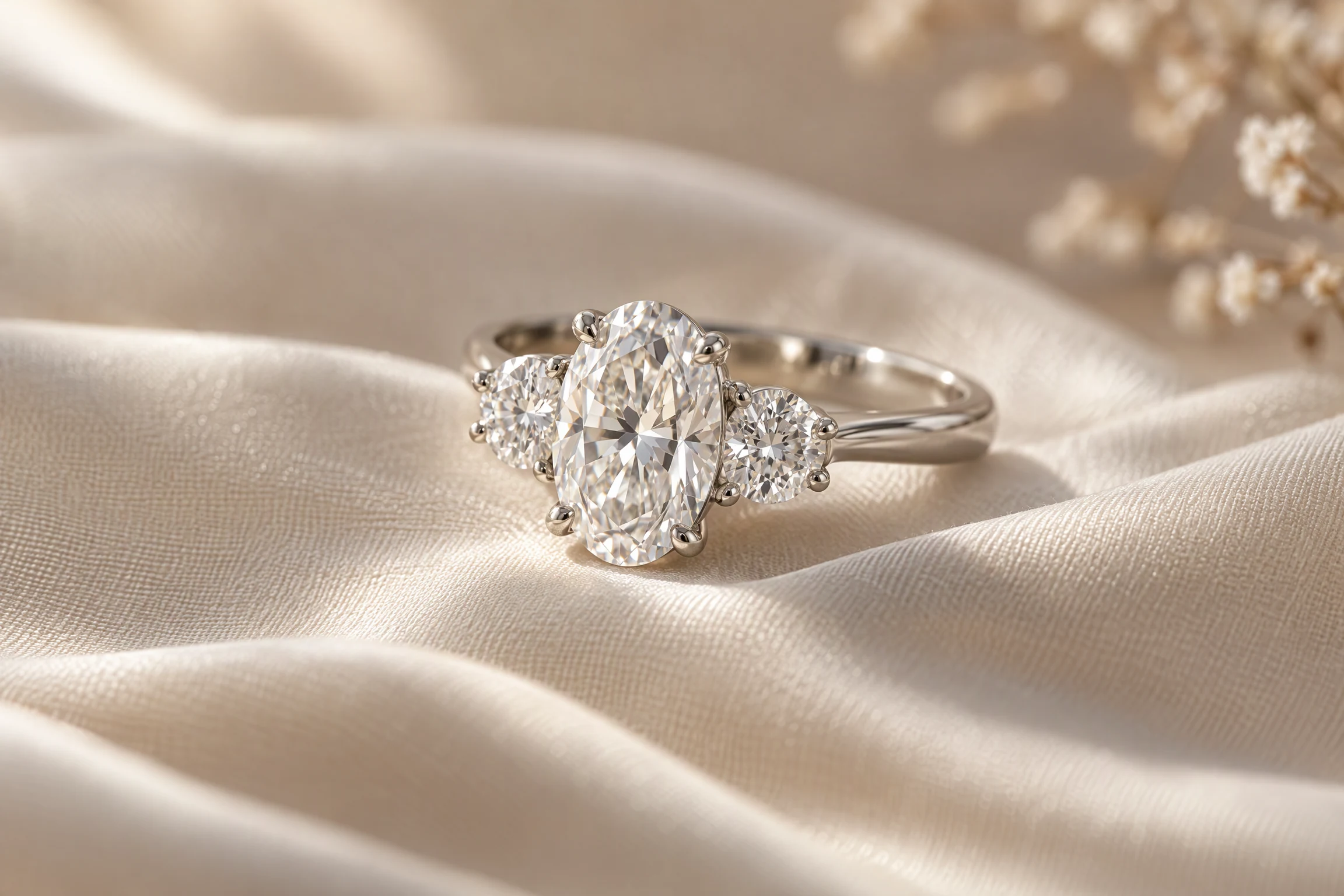
What Is a Three-Stone Engagement Ring?
A three-stone engagement ring pairs a center gemstone with one stone on each side. The center stone is often larger, although some designs use three stones of similar size or a center gemstone framed by diamonds. The side stones may match the center or create contrast through a different shape or color.
Some people associate the three stones with a relationship’s past, present, and future. That is a popular interpretation, not a fixed rule. You can choose the design for its meaning, its appearance, or both.
The style is also called a trilogy ring. When all three stones are diamonds, it is a three-stone diamond engagement ring. If the center stone is a diamond and the side stones are colored gems, ask the seller to identify each stone and disclose any relevant treatments. The FTC Jewelry Guides say gemstone and jewelry descriptions should accurately represent qualities such as type, grade, quality, color, size, weight, and treatment.
- Three-stone rings usually have one center stone and two side stones.
- The stones may match in shape or use complementary shapes.
- The meaning is personal; there is no single interpretation you need to follow.
How to Choose a Three-Stone Engagement Ring
The best three-stone engagement ring is not necessarily the one with the largest total carat weight. Look for a design whose stones appear balanced, feels comfortable to wear, and fits your budget and lifestyle.
- Decide whether you want the center stone to stand out or blend into a more even row.
- Compare face-up measurements as well as carat weights. Carat is a unit of weight, not a direct measurement of visible size.
- View the finished ring from the top and side, and compare the stones together rather than evaluating them only as separate items.
- Ask for a price breakdown that includes the center stone, side stones, setting, metal, labor, resizing, and service charges.
Part 1 of 5 complete
Popular Three-Stone Diamond Shapes
A three-stone ring can use three matching shapes or combine a center shape with complementary side stones. Matching shapes often create a symmetrical look, while contrasting shapes can frame the center or add a more individual style. GIA describes round brilliant, oval, princess, cushion, and emerald-cut diamonds as popular choices for three-stone designs and notes that shapes can also be mixed.
- Three-stone round engagement ring: Round center and side stones create a classic, symmetrical look. Compare the side stones’ diameter and height with the center.
- Three-stone oval engagement ring: An elongated, coordinated style. Check that the side ovals follow the center stone’s direction and do not make the ring feel too wide.
- Oval center with tapered side stones: Baguettes or smaller round diamonds can draw the eye toward the center and create a streamlined outline.
- Three-stone marquise engagement ring: The pointed, elongated center creates a distinctive silhouette. Check that the tips are protected and the side stones do not crowd them.
- Princess-cut three-stone engagement ring: Square or tapered side stones can complement the center’s geometric outline. Check that the corners are protected and the stones align neatly.
- Three-stone emerald-cut engagement ring: A row of step-cut stones creates a clean, elegant look. Inspect each diamond in person or in high-quality video for visible inclusions and color differences.
Compare the Three Stones as a Group
Do not assess the center and side stones only as separate items on a product page. View the complete ring from the top and from the side. Consider whether the stones sit at similar heights, whether their outlines complement one another, and whether the center remains visually prominent in the way you want.
For three-diamond designs, ask how the color and clarity of the side stones relate to the center. The grades do not necessarily need to be identical, but visible differences can change the overall look. GIA notes that side-stone color is often selected to be identical or close to the center stone’s color.
Ask the seller for grading reports where available, as well as clear images or video of the actual stones. A grading report describes assessed characteristics; it does not replace viewing the finished ring and checking that the stones work well together.
- Compare the stones together under neutral lighting.
- Check that the side stones look balanced beside the center.
- Ask the seller to explain visible differences in color or clarity.
- Review any grading reports and confirm which stone each report describes.
Set a Budget for the Complete Ring
A three-stone engagement ring contains three prominent gemstones, so the total price depends on more than the center diamond. Ask for a breakdown that identifies the center stone, both side stones, the setting, metal, labor, and any resizing or service charges.
Compare complete rings on a like-for-like basis. A lower center-stone carat weight may still create a substantial look when the side stones add visible width. Conversely, a ring with higher total carat weight may not look larger if its stones are deep or arranged in a narrow profile. Evaluate the actual dimensions and finished design rather than relying on total carat weight alone.
Diamond quality and value involve the combined 4Cs: cut, color, clarity, and carat weight. GIA explains that these factors should be considered together rather than judging a diamond by carat weight alone.
Choose a Setting for Appearance and Everyday Wear
Prong settings leave much of each gemstone visible and can emphasize its shape. Bezel settings use a metal rim around the stone and offer more edge protection. GIA describes prong and bezel settings as common choices for three-stone rings, with the best option depending on personal preference and lifestyle.
A three-stone setting has several gemstones to secure, so craftsmanship matters. Ask a jeweler to check that the stones are firmly held and that prongs or bezels are finished smoothly. GIA recommends periodic checks for ring settings because prongs can wear over time and loose stones should be inspected by a professional.
If you work with your hands, play sports, or prefer a ring that sits close to the finger, discuss lower-profile options and protective settings with a jeweler. A lower setting may reduce snagging, but comfort depends on the complete design, not only the height of the center stone.
- Prongs show more of the gemstone but should be checked periodically.
- A bezel surrounds the stone’s edge with metal and offers added edge protection.
- Ask a jeweler to inspect the setting if a stone moves or a prong catches on fabric.
Pair a Three-Stone Engagement Ring with a Wedding Band
A three-stone ring may have a wider head than a solitaire, and the side stones can affect how a wedding band sits beside it. Before purchasing, try the engagement ring with a wedding band of similar width and profile. Check whether the bands sit flush, overlap, or leave a gap, and decide which look you prefer.
If a straight band does not sit comfortably beside the ring, a curved or contoured wedding band may follow the shape of the three-stone setting. Another option is to choose a deliberately coordinated set. Confirm the fit with the actual ring design rather than assuming every band will sit the same way.
Pros and Trade-Offs of a Three-Stone Ring
A three-stone ring offers a prominent, detailed look and many ways to personalize the design. Different combinations—such as an oval center with round sides or an emerald-cut trio—can make the ring feel distinctive. The side stones can also add visual presence around the center.
The trade-offs are practical. Three stones mean more setting details to inspect and clean than a simple solitaire. The wider head may feel different between the fingers, and some wedding bands may not sit flush. The total price also depends on all three stones and the setting, so compare the complete piece rather than focusing on one stone’s specifications.
A three-stone ring can have more total areas of light return because it has three stones, but sparkle depends on each diamond, its cut and proportions, the lighting, and the way the stones are arranged. GIA recommends comparing rings under different lighting conditions rather than judging only under bright jewelry-store lights.
Sources
GIA, “How to Buy a Three Stone Engagement Ring”: https://4cs.gia.edu/en-us/blog/how-to-buy-three-stone-engagement-ring/
GIA, “GIA Guide to Engagement Ring Settings”: https://4cs.gia.edu/en-us/blog/guide-to-ring-settings
GIA, “Diamond Quality Factors”: https://www.gia.edu/diamond-quality-factor
Federal Trade Commission, “Jewelry Guides”: https://www.ftc.gov/news-events/topics/tools-consumers/jewelry-guides
Keep learning: read the Diamond Buying Guide, explore diamond shapes and the diamond 4Cs, browse comparisons, or see all buying advice.
Frequently asked questions
What do the three stones in an engagement ring mean?
Some people interpret the stones as past, present, and future; others choose different personal meanings. There is no single meaning you have to follow. You can choose the design simply because you like how it looks.
Is a three-stone engagement ring more sparkly than a solitaire?
It can have more total areas of light return because it has three stones, but sparkle depends on the individual diamonds, their cut and proportions, lighting, and how the stones are arranged. Compare rings under more than one lighting condition.
Which diamond shape is best for a three-stone engagement ring?
There is no universally best shape. Round, oval, princess, cushion, marquise, and emerald-cut designs can all work. Choose a combination whose outlines and proportions look balanced together and suit the wearer’s taste.
Can I wear a wedding band with a three-stone engagement ring?
Yes. Many three-stone rings pair with a straight wedding band, while some designs work better with a curved or contoured band. Try the specific rings together before buying to check the fit and any gap.
Do the three diamonds need to have the same color and clarity grades?
Not necessarily. The stones should look harmonious together, but identical grades are not a requirement. Ask the jeweler to show the stones together under neutral lighting and explain any visible differences.
Related articles
Engagement Ring Shopping
How to Choose an Engagement Ring: 5 Setting Styles Compared
Compare solitaire, halo, hidden halo, bezel and vintage-inspired settings by look, security, upkeep and total cost, then use a simple scoring framework to pick between your finalists.
Updated November 13, 2026
Diamond Education
The 4Cs of Diamond Quality: A Practical Buyer's Guide
How cut, color, clarity and carat weight affect a diamond's look and price, and a step-by-step way to decide which grades are worth paying for.
Updated November 13, 2026
Diamond Education
Diamond Clarity Chart: How to Read Diamond Grades
Understand the 11 GIA diamond clarity grades, what inclusions and blemishes mean, and how to compare a report with the stone you may buy. Learn why the highest grade is not automatically the right choice.
Updated November 7, 2026
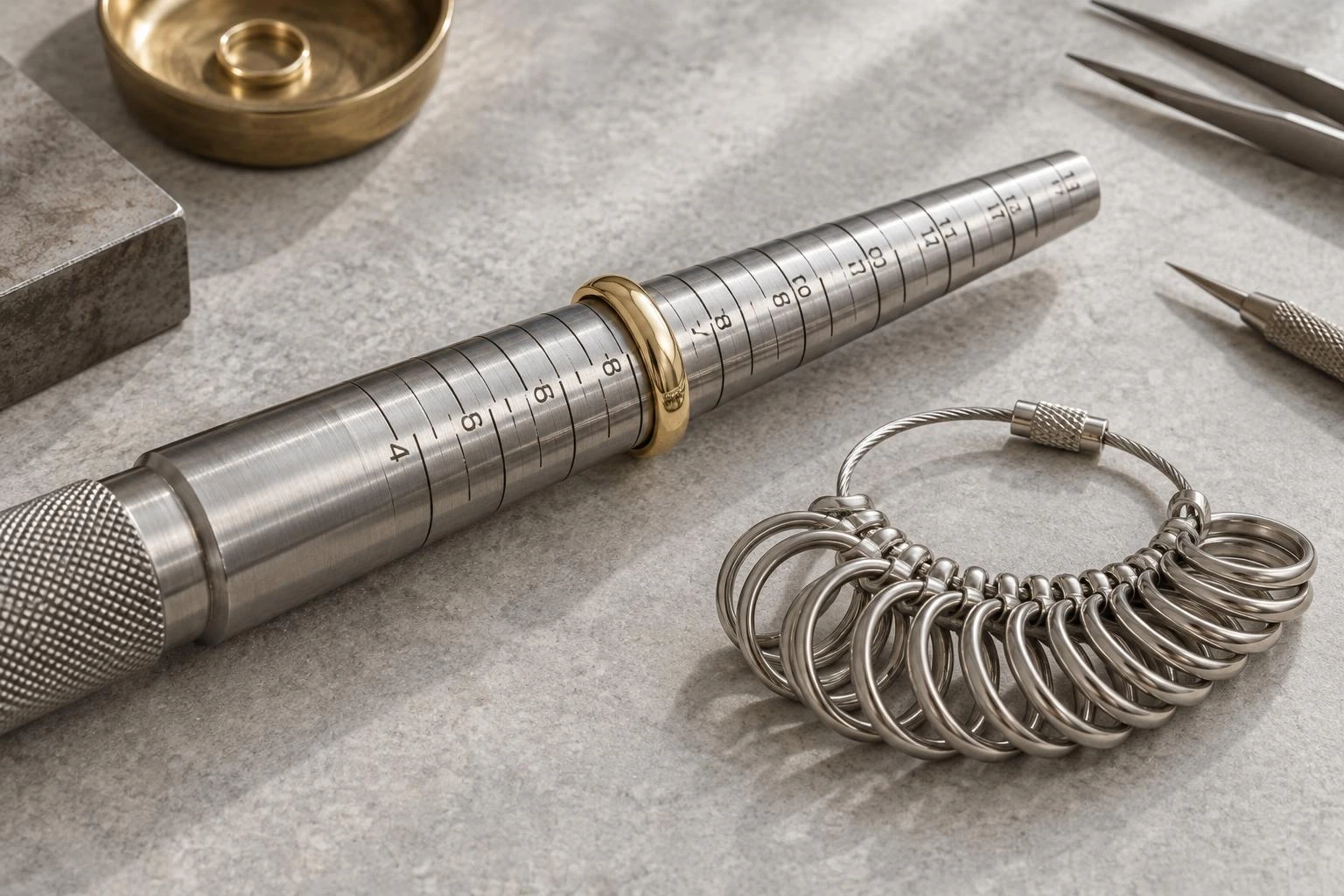
Ring Sizing
How to Find Your Ring Size: Accurate Methods and Fit Tips
Discover how to measure your ring size accurately, understand proper ring fit, use professional sizing tools and discreetly estimate a surprise engagement ring size.
Updated November 11, 2026